4.6- Spring Heeled Jack
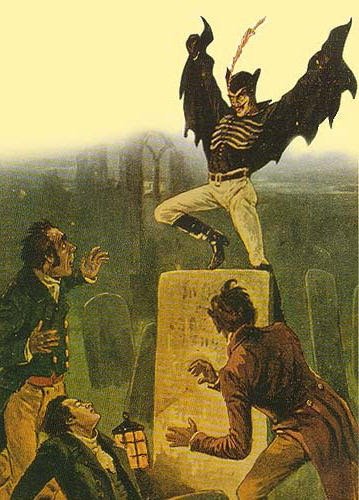
In the dark of night in Victorian London ladies better beware. For a devil stalks these streets. Is he a man or is he a monster? Is he even real? Beware, beware Spring-heeled Jack.
They seek him here, they seek him there. The devil who haunts the streets of Victorian London. Is it a bird? Is it a plane? No, it’s Spring-heeled Jack!
4.5- Ghosts of the Lygon Arms
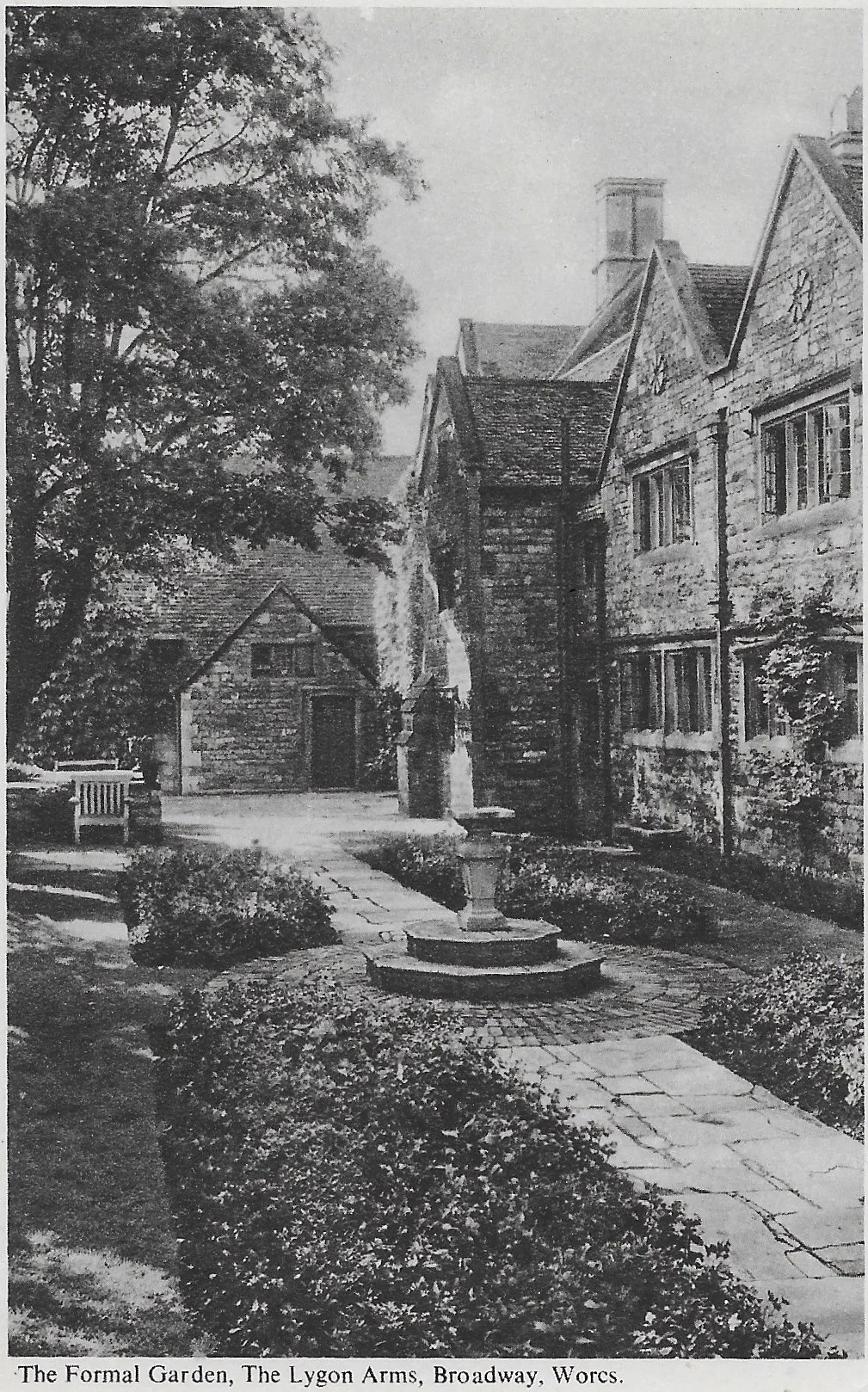
The Lygon Arms in the Cotswolds is one of England’s finest country hotels. If these walls could talk, what would they say?
This fine Cotswold hotel has a long and haunting history. But what stories could the ghosts of The Lygon Arms tells if they could speak? Listen to the episode to find out.
4.4- Meester Stoor Worm
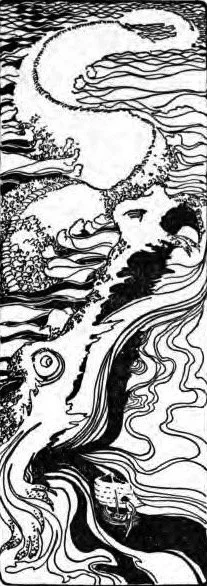
Beneath the rolling North Sea lurks a serpent of deadly power. Meester Stoor Worm is more vast than any other sea serpent. With his poison breath he lays waste to the islands, terrorising the poor people of Shetland. Who will save them from this monster of the mysterious deep?
This sea serpent is so vast that he can swallow whole towns. He poison breath rolls in from the sea as a fog of death. He sheds house-tall scales thicker than Odin’s armour. He is the beginning and the end of life. Who will defeat him?
Listen to the full episode for the epic details and then vote on the poll below.
4.3- The Highgate Vampire
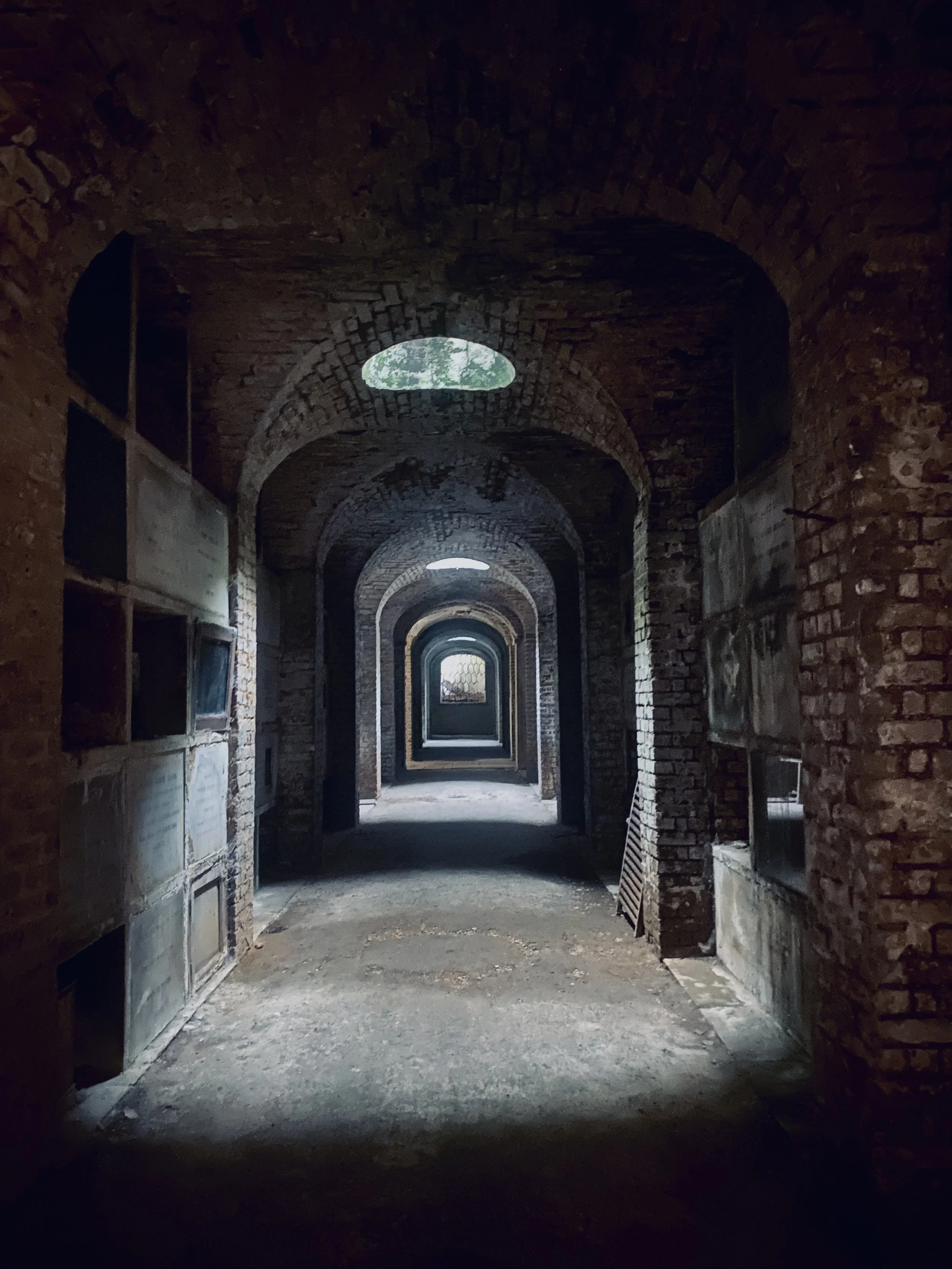
Some say a vampire stalks the crumbling Victorian cemetery in Highgate. But what is the truth? Does a fiend lurk behind the mausoleums and sephulcers?
Beyond the crumbling gates of Highgate Cemetery dwells a fiend with burning eyes and a taste for blood.
Or does it? the Highgate Vampire is one of those tricky urban legends where it is difficult to tell hard fact from fantastical fiction. So many people have added to the tale since the stories were first told in the late 60’s that it is difficult to know exactly where the idea of a vampire in Highgate Cemetery originated.
What’s more, there seem to have been attempts by the original investigators- Sean Manchester and David Farrant- to sensationalise (or even fabricate) eye witness accounts.
Listen to the full episode to get the low down on this intriguing urban legend.
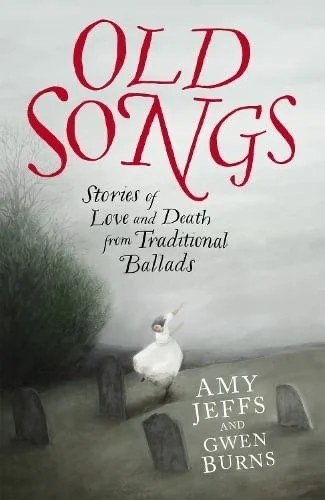
4.2- Old Songs
Writer Amy Jeffs, illustrator Gwen Burns and musician Natalie Brice sit down with use to talk about their magical new book ‘Old Songs’.

This episode sees us interviewing the writer Amy Jeffs, illustrator Gwen Burns and musician Natalie Brice about their new book ‘Old Songs’, which reimagines ten traditional British ballads through new storytelling, images and rearrangements of the original music.
Pre-order the book, which is released on 25th September, by following this link.
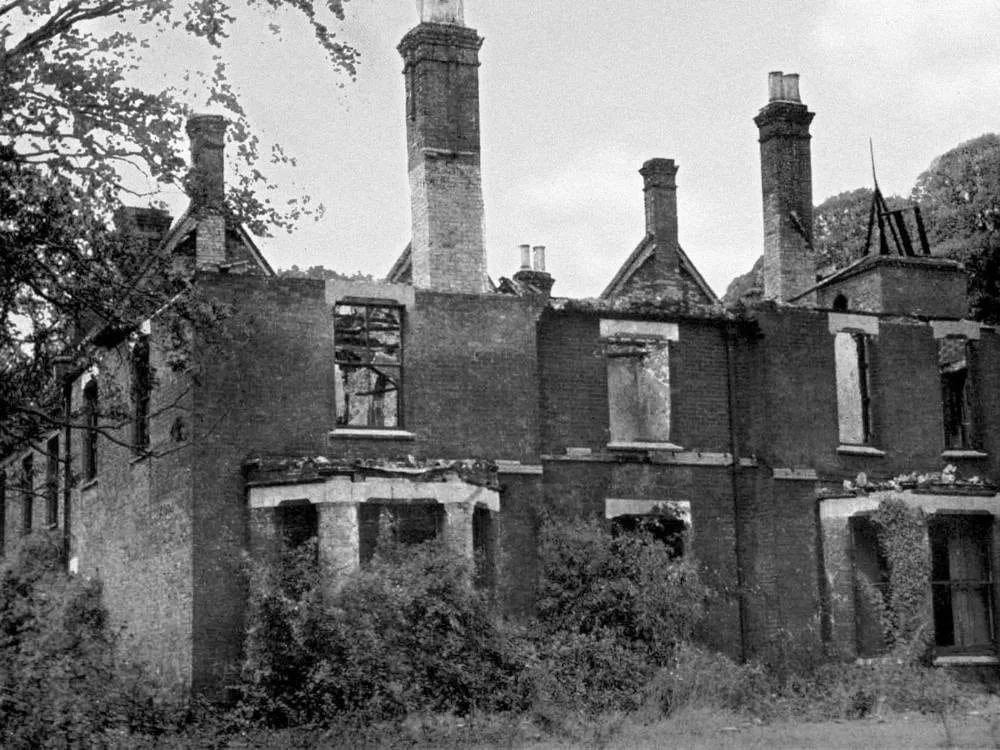
4.1- Borley Rectory
How did a rectory in the quiet Essex countryside become known as the most haunted house in England?
Reputed to be the most haunted house in England, the story of Borley Rectory is filled with drama, betrayal and family secrets.
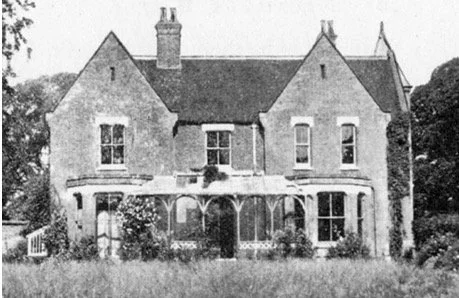
The Bulls of Borley
You might expect that the most haunted house in England would be an ancient place with a long history and plenty of gruesome deaths to its name. But Borely Rectory is surprisingly modern. Built by the Reverand Henry D. Bull in 1864, the house wasn’t even a hundred years old by the time is burned down in 1939.
The Bull family lived in Borley Rectory for most of its lifespan, with all of the fourteen siblings (except the eldest) being born there. The children seem to have been very attached to the place, with the girls growing to women there and then remaining in the house once their brother had taken over as rector.
It is these women who perpetuate the stories of Borley, with many contemporary accounts crediting Reverend Bull’s daughter Ethel as being the one who first told the famous story of the damned nun and her monk lover, which would later evolving into the Borley poltergeist and the headless monk.
The timeline is full of confusing names and dates. There is an invaulable resource on the Foxearth Locals History website which lists all the players in the saga of Borley.
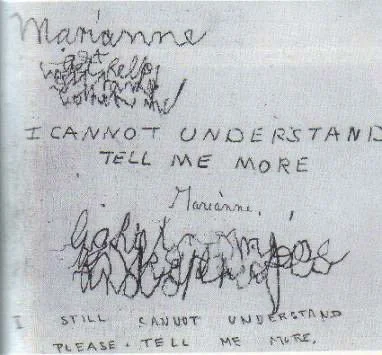
Borley Unchained
Once the second Reverand Bull had passed away, the living at Borley passed to Reverand Guy Eric Smith and his wife Mabel. It was this couple who first brought Borley to the attention of the general public by writing a letter to the Daily Mail, in which they complained of the haunting at Borley and asked to be put in touch with the Society for Psychical Research. This event can be seen as the real beginning of the Borley story. Once the article was out in the world it drew attention from all sorts of people, including the psychic researcher Harry Price.
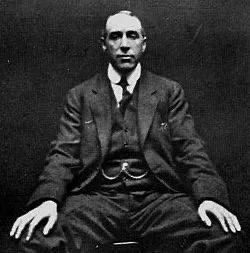
Harry Price
Budding psychic researcher Harry Price became obssessed with Borley Rectory and made it his life’s work to fully investigate the reported disturbances at the house. Over the course of two decades, Harry tried to discover the source of apparently supernatural happenings. Sadly for Harry, many of the later eye witnesses were unreliable and his methods were called in to question. You can read a more detailed account of Harry’s activities at Borley on the Harry Price website.

3.8- The Beaumont Tree
The heart of a highwayman sprouts a tree with healing powers. But why was he buried there?
The Heart of the Highwayman
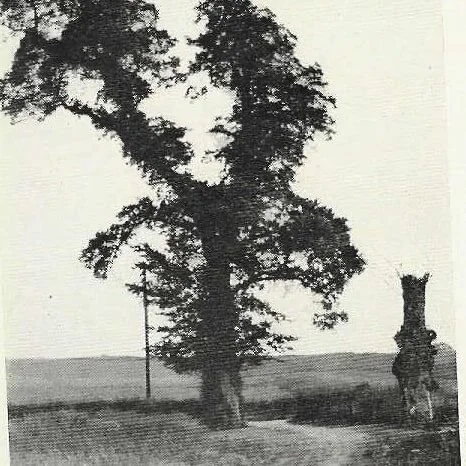
The scion of the Beaumont Tree
The centre of this story, or the heart, belongs to an unnamed highwayman, who was shot on the road just outside of Silsoe in Bedfordshire. Local legend has it that who ever shot the brigand cut a stake from an elm fence post and drove it through the highwayman’s heart before burying him in an unmarked grave by the side of the road.
In local lore the elm which stood by the roadside for hundreds of years was a product of this burial, with the massive tree rooting from the heart of the highwayman. No wonder then that the tree was reputed to have strange powers.
Folk Medicine
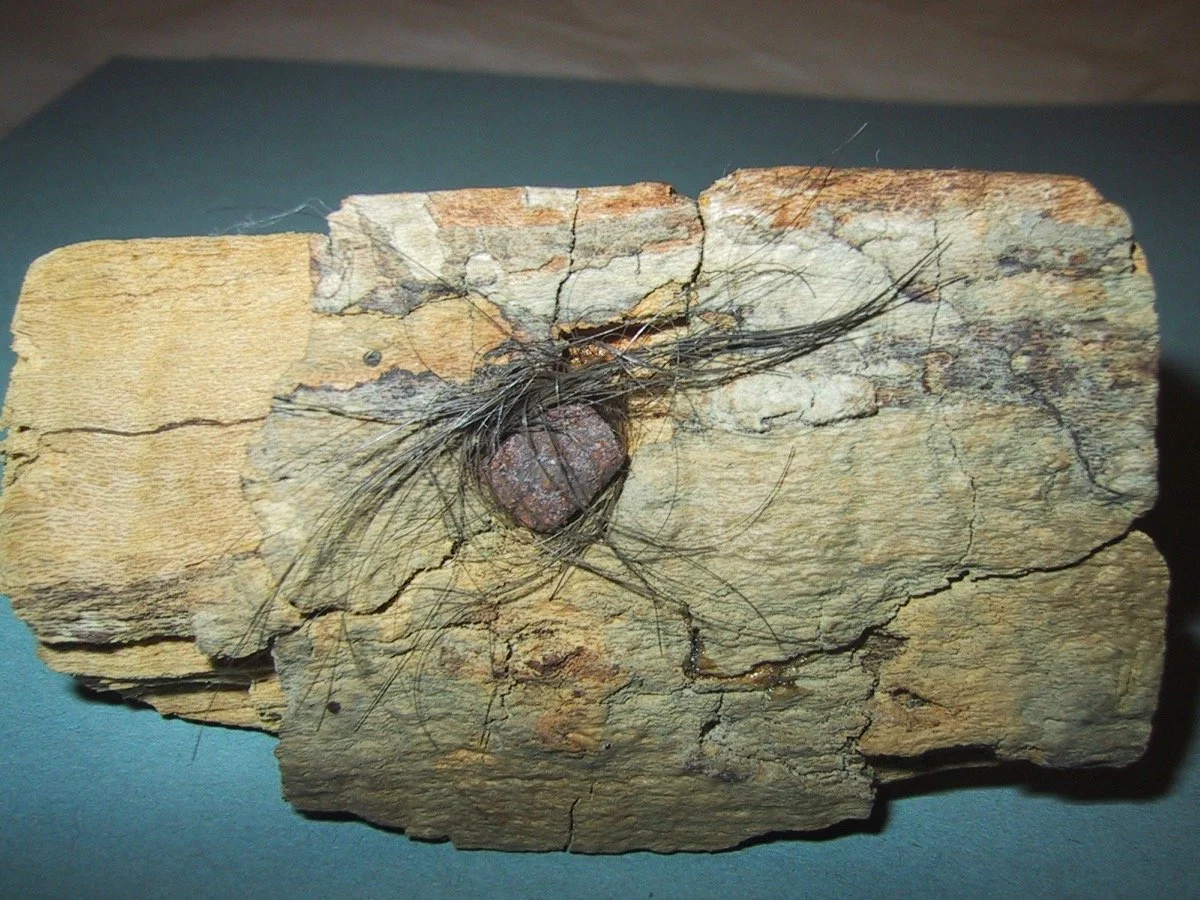
A piece of the Beaumont Tree with hair and nail embedded.
Over the years, the Beaumont Tree has been credited with possessing many curative properties. Strands of hair if nailed to the tree at midnight were said to either cure or prevent the ague, otherwise known as ‘marsh fever’. Sadly the Beaumont Tree fell victim to the plague of Dutch Elm Disease which swept through the UK and nothing now remains of the original tree or the scion it produced, except for the small section kept in the archives at The Museum of Anthropology and Archeology at Cambridge University.
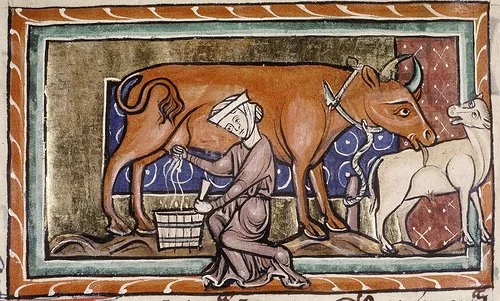
3.7- The Dun Cow with Willerby
The Dun Cow is on the rampage, again. Luckily we’ve got the people from Willerby village to give us some advice about how to handle the beast.
Join us this week as we take you to Willerby, a little village in the Midlands with some strange magic in the air. The villagers have been having some problems with The Dun Cow and Dan, a representative from the parish council, talks us through the key methods for dealing with The Cow.

The story of the dun cow
The original story of the Dun Cow seems come to us from the area of Dunsmore Heath near Rugby but it is also a recurring motif in folkore from Durham, Somerset and Lancashire.
In the most famous retellings, involving the giant Guy of Warwick, the gargantuan cow is at first a blessing. Able to give hundreds of bushels (a bushel= 64 pints ) of milk a day, the cow provides enough milk to support an entire community.
But there is always someone who wants to mess up such a perfect set up. In this case, the culprit is often a witch. Although sometimes it is some young boys playing a prank or anther equally selfish member of the community.
What is always the same is the method by which the cow is made to turn against the community it has served so patiently. In every version, the ingrate who spoils everything does so by milking the cow through a sieve (for mysterious reasons known only to themselves).
The cow’s reaction to such treatment is to go mad with anger and rampage through the countryside until it is stopped by a strong man, who manages to slaughter it in a feat of Herculean bravery.

Guy of Warwick
The hero of the hour in the medieval romances is Guy of Warwick. This giant of a man was said to have lived during the reign of King Athelstan. He is credited in legend with having slain the giant Colbrond in single combat. He is also famous for being the man who slayed the Dun Cow.
The story of the cow is only part of Guy’s legend. Once as famous as Robin Hood, artefacts associated with him were being collected by the Earl’s of Warwick as early as the 14th century. In fact, Guy’s enormous porridge pot and fork are still on display at Warwick castle to this day.
Willerby
Just like the poor people of Anglo-Saxon Warwick, our friends at Willerby village also have problems with the Dun Cow. Parish councillor Dan came on the show to explain to us some of the problems they face when the cow comes to call. If you want to read that story in fill for yourself then head over to the Willerby website or find them on Bluesky or Instagram.

3.4- The Devil’s Nutting Day
The 21st of September is the Devil’s Nutting Day. Be careful if you go a-nutting!
Be careful when you go out nutting, you might find yourself between the devil and his nuts.
Hazel Nuts and the Devil (Nikki’s Inspiration)

Helpful gentleman or devil in disguise?
Several counties in England have traditional nutting days, when the hazel nuts in the hedgerow are finally ripe for picking.
In fact, schools in some areas had 14th September (one of the traditional nutting dates) as a teacher training day to allow students to gather perfectly ripe nuts for over Winter.
Nutting Day is also associated with the third Sunday in September (or Holy Rood Day), the tradition of picking nuts in the hedgerows after church quickly became associated with courting couples. After all, how many other excuses did young people have to spend time idling in the countryside alone?
There are even cautions to maidens who go a-nutting to guard themselves against sin. Nutting Day had become synonymous with unexpected pregnancies!
Perhaps this is how the devil creeps in to nutting day. In some parts of the country maidens are cautioned against the good looking man who appears out of nowhere to offer assitance to a nut picking girl.
But could this gentleman be the devil in disguise? Be careful maids of England. You could be about to go nutting with Lucifer.
The Devil’s Nut Bag
One famous local legend takes the idea of the devil’s taste for nuts and spins it into a story set against a local landmark. A hill known in modern times as Alcock’s Arbour, just outside of Stratford upon Avon, has long been associated with the devil.
The story goes that the devil is out gathering nuts on 21st September when he is interupted by the appearance of the Virgin Mary. He is so shocked that he drops his bag of nuts, which formed the hill we see today.
So do be careful if you go out gathering nuts in September. If you smell brimstone then flee for your life because the devil is out gathering his nuts too.
3.6- The Ballad of Tam Lin
The beautiful Scots border tale of Janet and her lover Tam Lin is an enduring reminder of the power of love.
This romantic ballad tale from the Scots Borders has worked its way into popular culture through many films and book series. This week we look at the heart of the tale: Janet and her elf lover Tam Lin.
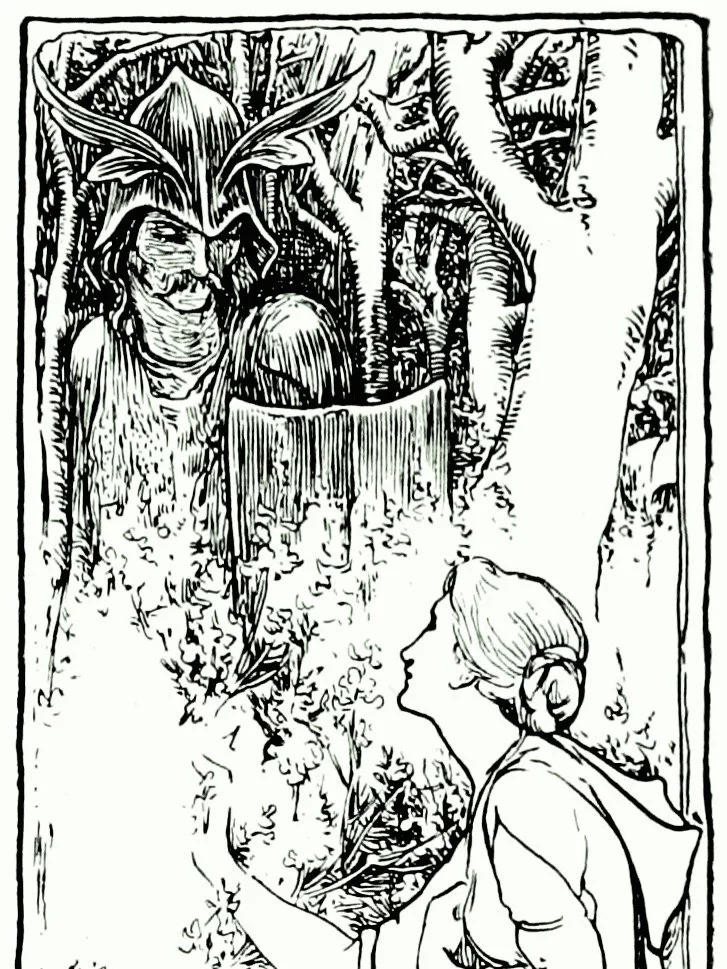
Illustration by John. D. Batten for More English Fairytales
The origins of Tam Lin
Written record of Tam Lin begins with the broadside ballads of the 17th and 18th century, when balladiers could pay to have their songs printed on to single sheet ‘broadsides’ for sale to the public. The earliest version of Tam Lin in the Child Ballad Index dates from 1791. It tells the story of a girl called Janet, who is cautioned not to stray in the forest of Carterhaugh, because of an elf with a taste for relieving maidens of their virginity, called Tom Lin (or Tom Line).
I forbid ye, maidens a',
that wear goud on your gear,
To come and gae by Carterhaugh,
For young Tom Line is there.
The premise of the ballad is a romantic one: poor Janet meets Tom Lin. He takes her maiden head and she is left pregnant. When she goes to seek him out he tells her that he is no elf, but a laird’s son captured by the Fairy Queen. He tells her how to free him and brave Janet, who is either only just pregnant or very heavily pregnant, must pull him from the fairy procession and hold him as he goes through a series of animal transformations.
Luckily, this story has a happy ending and brave Janet manages to hold on to the father of her child, freeing him from the Fairy Queen’s enchantment.
It’s easy to see why this tale has such broad appeal and has been adapted so many times.
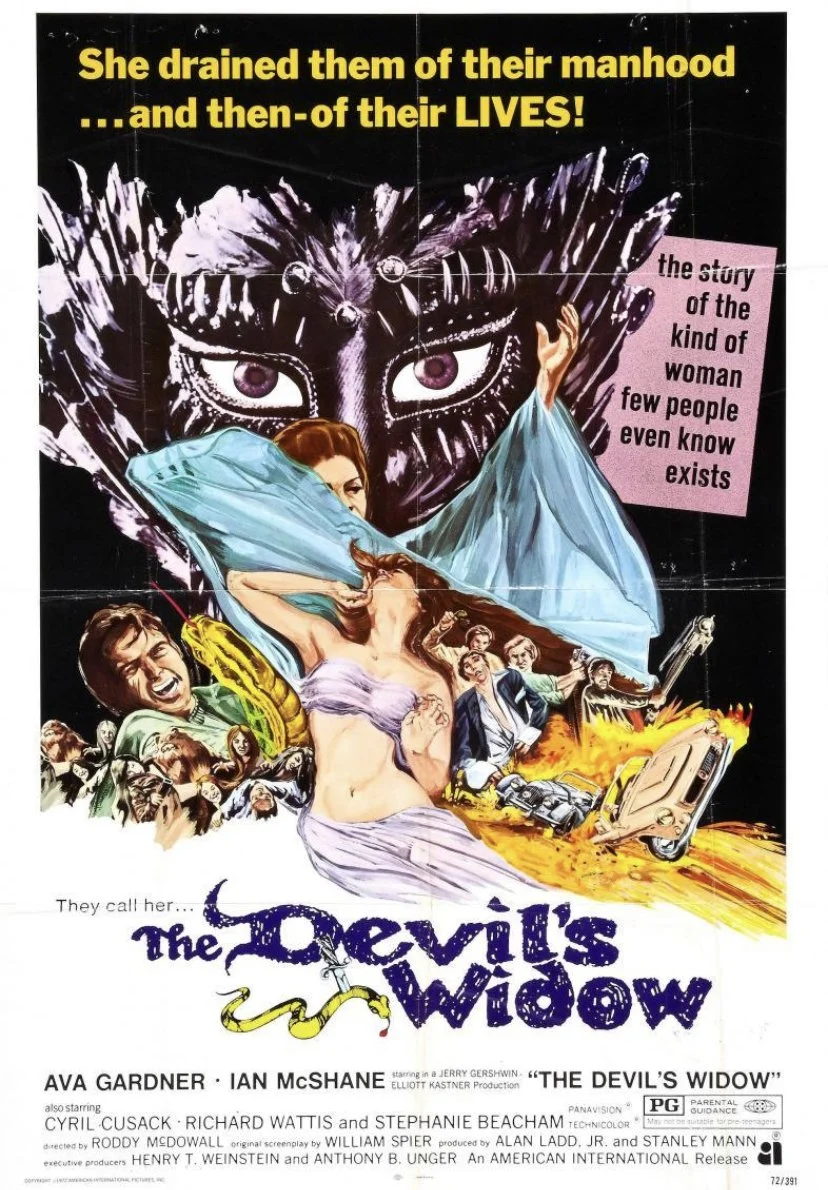
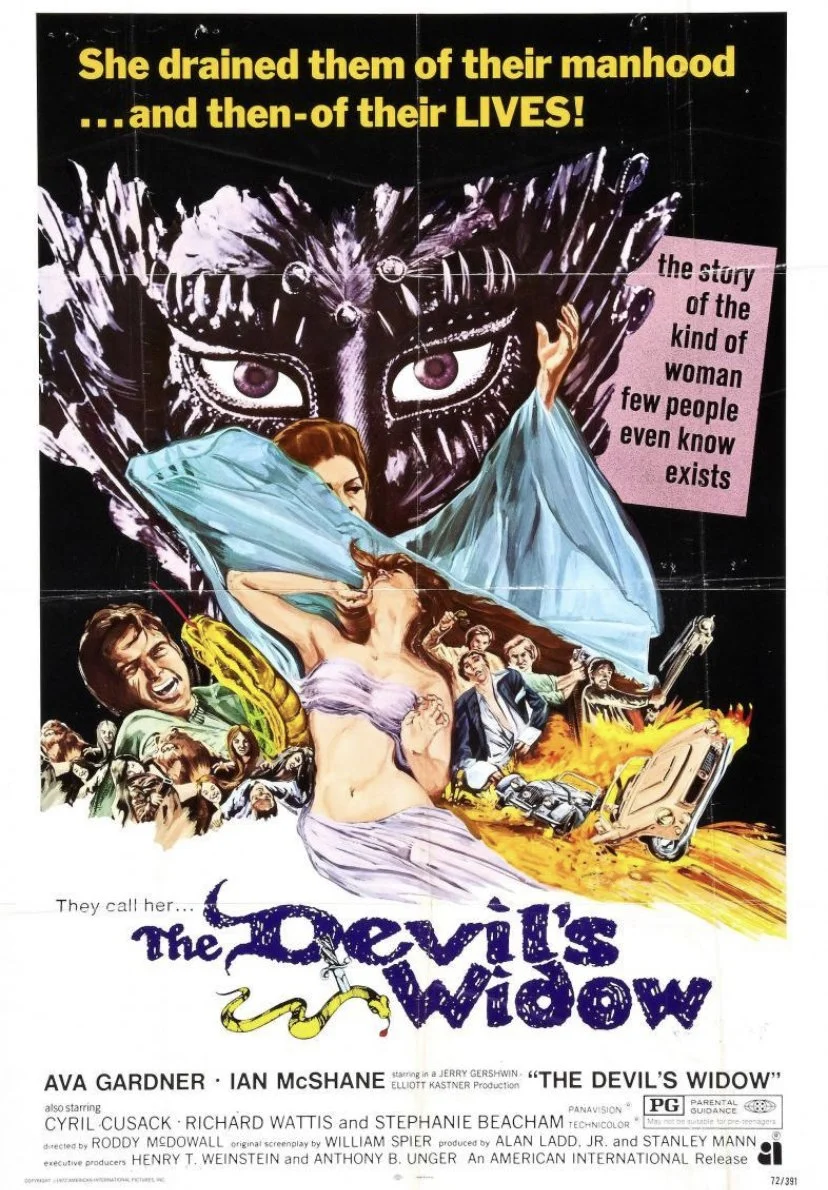
Postr for the 1970 Film Tam Lin, also known as The Devil’s Widow
The Devil’s Widow
In 1970, the ballad was very loosely adapted into the film Tam Lin by Hollywood star Roddy Mcdowell. The story is set in modern times and casts the faery queen as a wealthy middle aged woman (played by the beautiful Ava Gardner) who keeps herself young by surrounding herself with handsome young men.
In this adaptation the Tam character is called Tom and is played bya very young Ian McShane and his lover, Janet, lives at the parsonage. It’s an interesting look at how folktales can be updated and how the moral messages of these stories are still as cultural relevant today as when they were first written.

3.2- Taliesin and Ceridwen with Lucy Holland
Bestselling author, Lucy Holland, on ancient tales, bards and amazing women in history
Ancient bards and tales of transformation are this week’s topic, with the special guest appearance of the wonderful Lucy Holland! Lucy is the author of bestselling historical fantasy novels, Sistersong and Song of the Huntress, she also co-hosts Breaking the Glass Slipper, an intersectional feminist podcast.
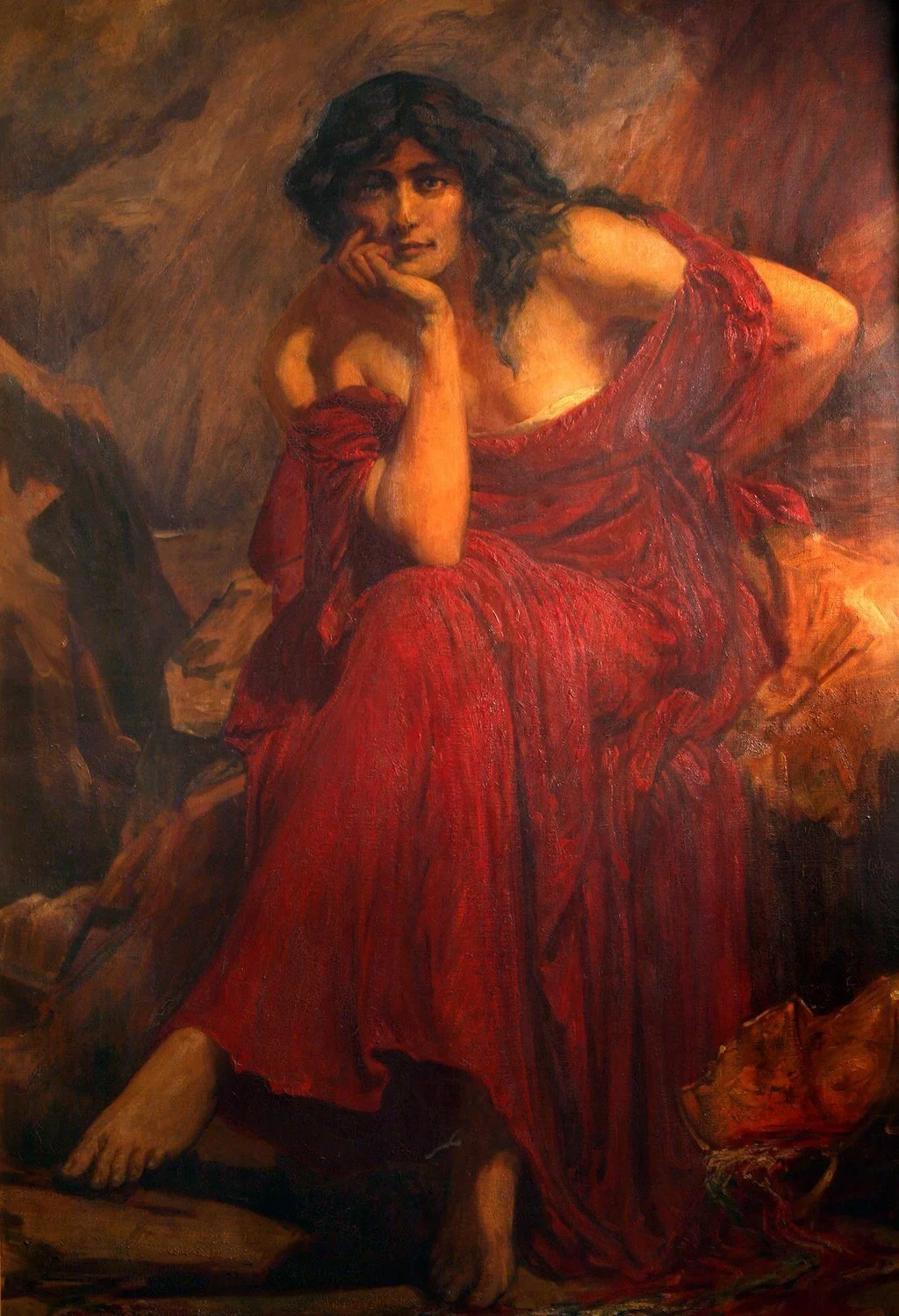
Ceridwen By Christopher Williams
Taliesin and Ceridwen
A fascinating figure, Taliesin is both historical - we have records of the very real bard and performer - and fantastical - a mystical figure from the Tale of Taliesin. It’s the mythical aspects of the infamous musician that we’re discussing with Lucy, whose current work in progress is inspired by the legend.
The tale is one of transformation; Taliesin (originally Gwion Bach ap Gwreang) was a servant of the powerful witch, Ceridwen, and was charged with stirring the Cauldron of Inspiration for a year as she prepared a potion for her son. However, as the potion brewed, three drops fell on his thumb and he sucked them without thinking - thus consuming the power of the brew and receiving enlightenment. Gwion fled in fear of Ceridwen’s wrath but the power of the potion was such that he transformed wildly before becoming a seed that Ceridwen accidentally ate. Gwion transformed again inside Ceridwen and was reborn from her body as a baby. Fostered by Elffin ap Gwyddno, he was renamed Taliesin to begin his life once more on the path to becoming a bard.

Myth & Fiction
While you’re waiting for Lucy’s fabulous next work, start your journey into historical fantasy fiction with Sistersong. Inspired by the Twa Sisters murder ballad, Sistersong explores transformation, treachery, love and death. Sistersong will be available in paperback from the 5th May, pre-order wherever you prefer to purchase!
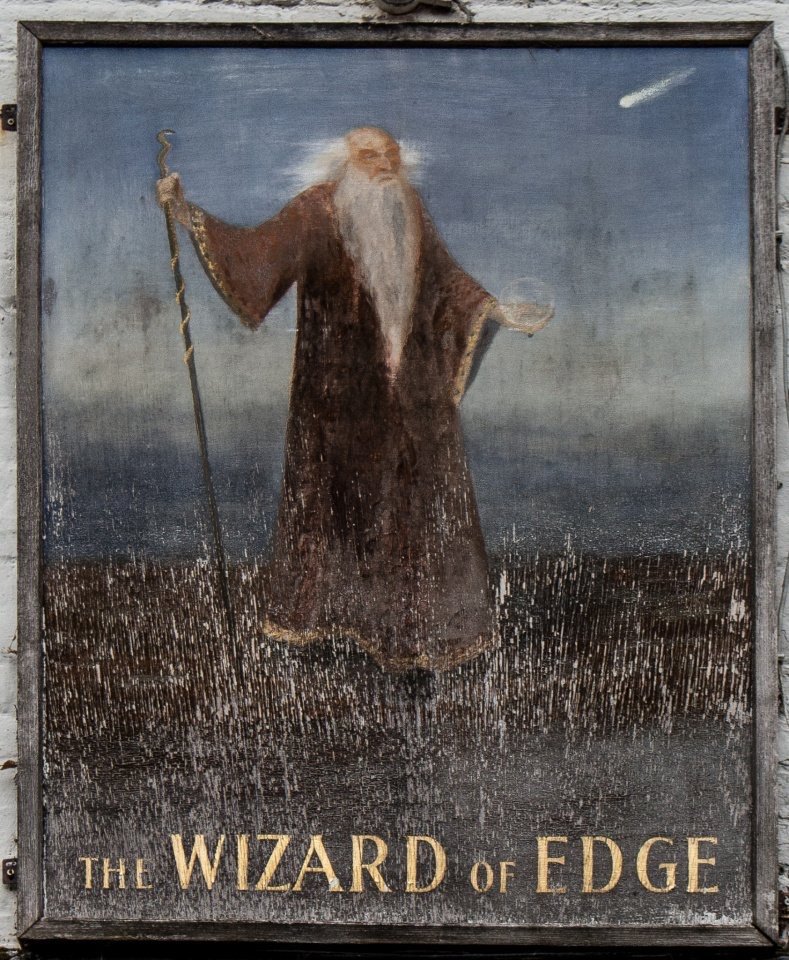
3.1- the Wizards of Alderley Edge
Wizards, bargains, sleeping knights. This story has it all.
This week we are looking at the Cheshire folktale that served as the inspiration for one of the greatest children’s fanatasy novels of all time ‘The Weirdstone of Brisingamen’ by Alan Garner.
A Farmer Goes to Market
The essentials of the story of The Wizards of Alderley Edge have all the main beats that you might expect from a traditional tale. There’s the greedy farmer, the wise wizard, the roadside bargain and the trip to fairy (in the form of a magical underground chamber).
The tale of an encounter on the road to market is so consistent in fairytale that even before the farmer in this story has finished his rejection of the wizard’s gold we, as readers, already know that he isn’t going to sell his horse at the market in Mobberly. In fact, we know, just as the wizard does, that the poor farmer will be back in this same spot later to sell the wizard his horse and that something magic will happen as a result.
In this sense, the story of the farmer’s encounter with the wizard ticks all the boxes for a traditional tale. There is even the lovely pay off at the end of the story where the farmer, who has established himself as quite greedy early on, is both rewarded and punished by the otherworldly experience of entering the enchanted cave and seeing the knights waiting for their destiny.
It is an interesting look at what is considered a just reward in fairytale.
Merlin (or not)
Some re-tellings of the tale would have it that the wizard is Merlin. And of course it is difficult for most British people to see an old man with a long white beard, who appears to be magical, and not think ‘Merlin’. But the original story does not specifically name the wizard as the main advisor to King Arthur, nor does it specify who the king is who lays in wait under The Edge.
However, there is a long association in Britain with King Arthur and Merlin and the sleeping hero trope. There are of course other contenders for this role, namely The Duke of Monmouth, and there is every possibility that the king and the wizard could be Anglo-Saxons or Celts. Yet somehow it is impossible to escape the association with the Once and Future King. This is why, for my story at least, I chose to name my ‘wizard’ after one of Arthur’s knights from the Mabinogi.
The Weirdstone of Brisingamen
For anyone reading who hasn’t read ‘The Weirdstone of Brisingamen’ (get yourself to a book shop), the novel uses the essentially story of the wizards of Alderley Edge and weaves into it elements of Arthurian legend, Irish mythology and Norse mythology in such an inventive way so that Garner has created a world of his own in the real world setting of Alderly Edge. I have always loved urban fantasy. When it is done well, as it is here, it give the reader the sense that they too could accidentally discover a secret world within our own, so close that right now it might be right next to us and we might never see it. For children especially, who’s imagination still run wild , it is an irresistible idea.
What the book does especially well is that make the children the agents of change in a world that is controlled by adults, both good and evil, letting them make decisions and take action, even when they are told specifically not to do anything. Colin and Susan have no super powers, except bravery and loyalty. Adn they have no special training, except a child’s belief that they are capable of anything. What child would not be entranced by the idea of walking out of their own door and straight into an adventure where they, without skills or training, could fight the forces of evil?
2.8- The MacKenzie Poltergeist
What haunts the crypt of Bluddy Mackenzie? This frightful poltergeist is said to be one of the most active in the UK. But what does it want?
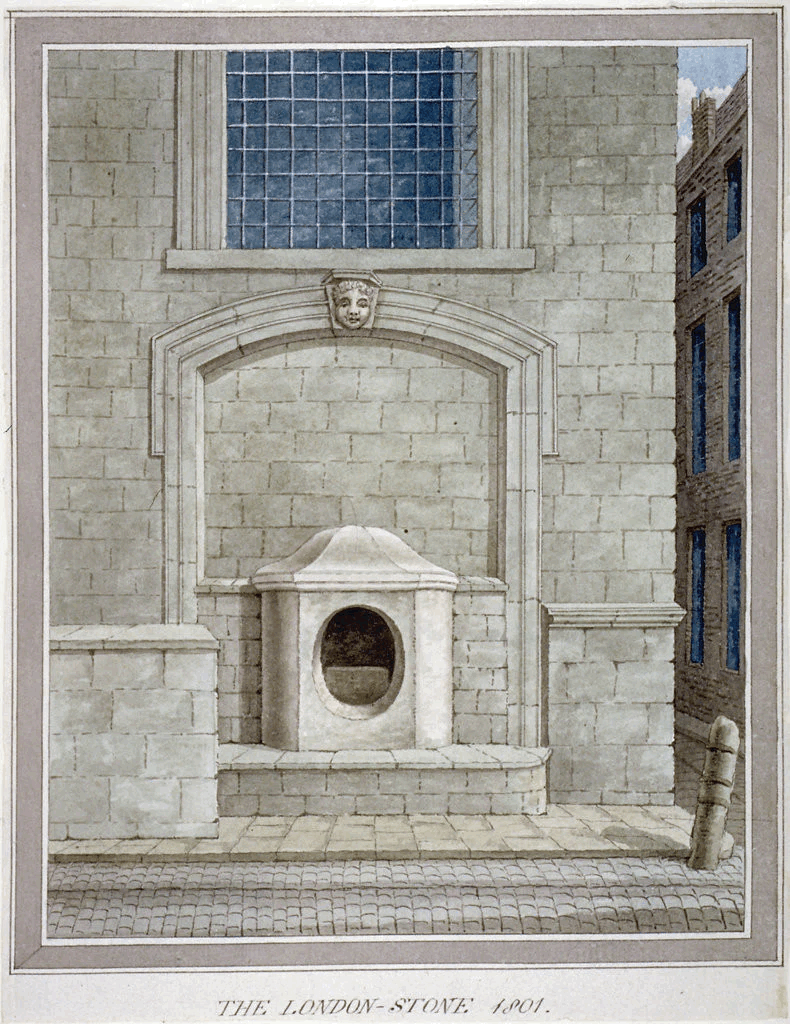
2.9- The London Stone
This mysterious stone has been talked about by Londoners since before the Norman invasion. What is it? Where did it come from? If only it could tell us its secrets.
In this week’s minisode we take a look around the few known facts about The London Stone, the most mysterious of the capital’s landmarks.

A City Landmark
One of the most fascinating things about The London Stone is that it has been a landmark in the City of London for over a thousand years. Texts stretching back to the early medieval period use the stone as a reference point or even remark on the stone’s mysterious origins. Londoners of all walks of life have either written about it, driven their carts over it or walked blithely past it. It was even one of the very first tourist attractions in London, being noted in an Elizabethan guide to the city as an interesting spot to visit.
City and Guilds
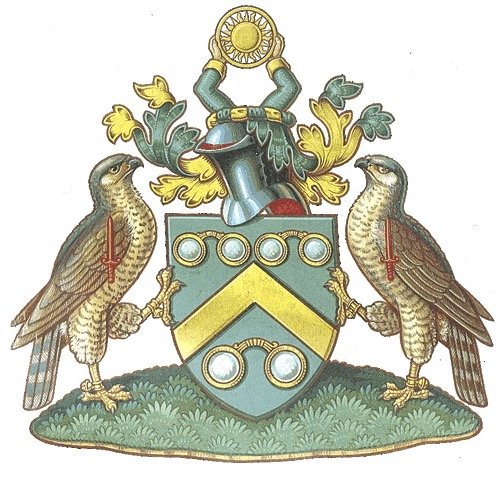
The London Stone, and its associated legend, are so indelibly linked with the city of London (the original city as marked out by Alfred the Great) that the various guilds and Lord Mayors often stopped over the years to make sure that it is well housed and looked after. But it did not have a regular inspection until it was taken under the protection of the Worshipful Company of Spectacle Makers in the last decade. This ancient guild, whose responsibility was to inspect any aids to sight made in the bounds of the city, is often assocaited with the stone because of the old story of the guild using the stone to break examples of shoddy spectacles on the London Stone. Since the stone was moved to its new housing in 2018, the Worshipful Company of Masons and the Worshipful Company of Spectacle Makers have joined together to do an annual inspection of the stone, to ensure its continued good health.
Kingmaker
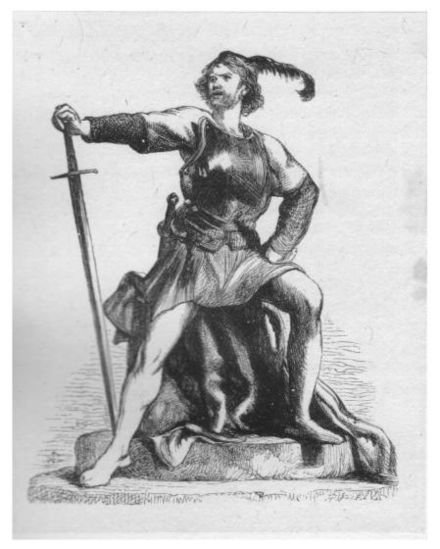
One of the earlier beliefs about the London Stone was that striking or sitting on it would make you lord of the city. This belief must be what led the rebel Jack Cade (pictured above) to strike the stone with his sword after he defeated King Henry VI forces and entered London in 1450. Cade’s rebellion was short lived but his symbolic act demonstrates the power of the stone in popular folklore. Cade ultimately couldn’t hold on to the power he’d claimed, even with the luck of the London Stone.
2.10- The Devil and The Blacksmith
Can great skill only be found by selling your soul? The devil promises much but can he deliver?
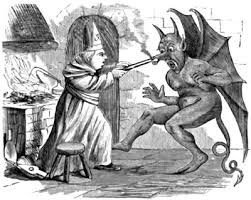
This week we are lucky enough to have famed folklore podcaster Mark Norman on the show. Read on to find out more about him and the ancient legend of The Devil and the Blacksmith.
Skill or Dark Magic?
For thousands of years, people have been fascinated with the idea that you could gain great skills from either divine gift or devilish dealings. Perhaps this is why As well as discussed with Mark in the episode, possessing extraordinary skills in any area of craft often makes people suspicious. How else could someone become so much better than anyone else? It is easy to see how the story can develop from here, especially under the Christian church.
2. The Patron Saint of Blacksmiths
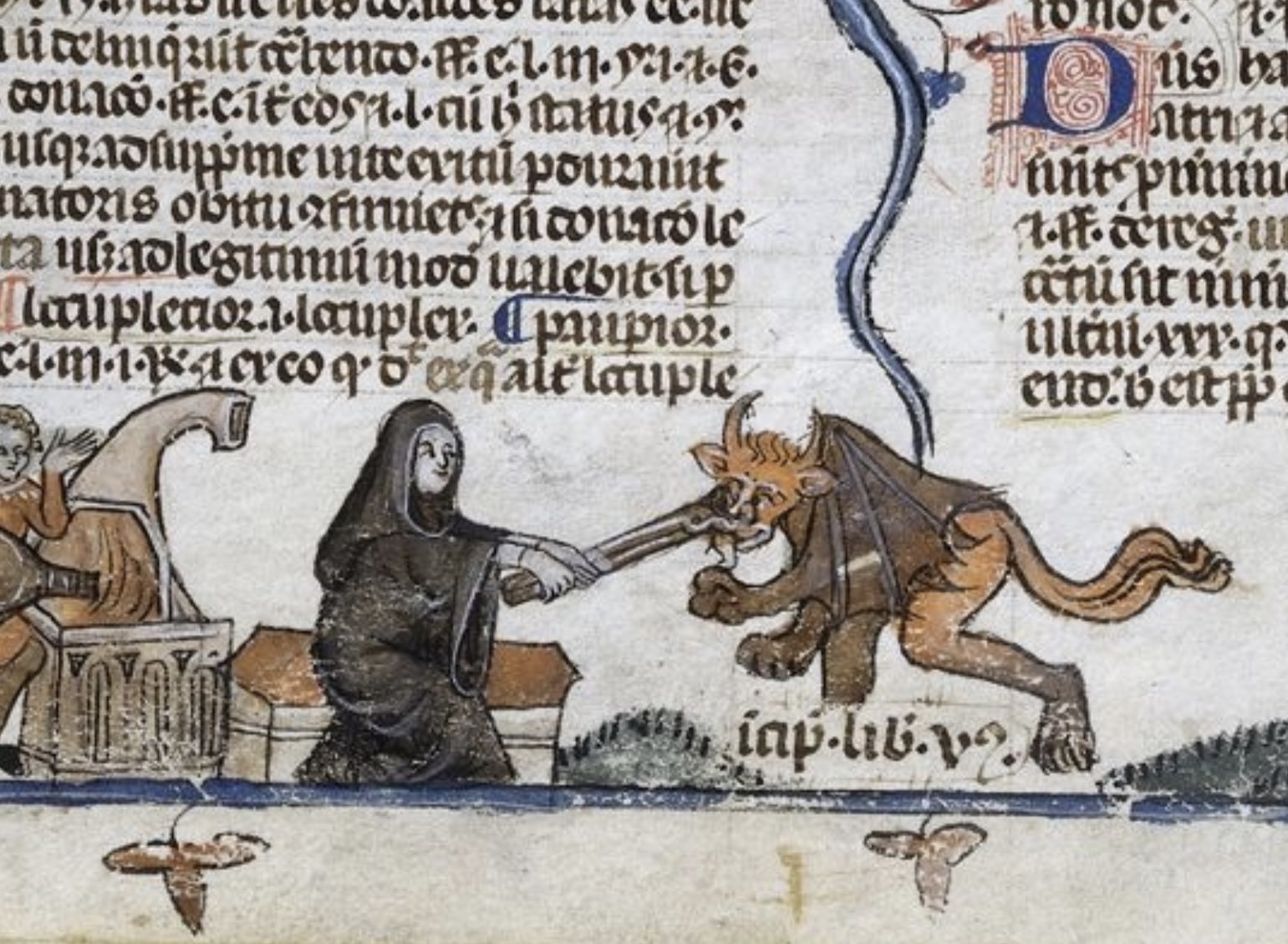
Every craft has its own saint to watch over those who ply that trade and blacksmithing boasts an association with one of the most famous saints of medieval England. St. Dunstan began life at the court of Alfred the Great but was hounded out after he was accused of dark magic because his skills with the harp were just too good to be human. Instead of taking this as his cue to delve into the darkest of magics, Dunstan took holy orders and set about reinvigorating the monastic system in England. As skill in metallurgy as he was with the harp, stories quickly arose about Dunstan battling with the devil, who in various guises tries to trick the holy man into creating something for him. Until the martyrdom of St Thomas a Becket in the 1100s, St Dunstan was one of the most popular English saints, vererated for his victories over evil.

Wayland and the Old Gods
Of course, the story of The Devil and the Blacksmith predates Christianity. But the idea of supernatural skill is an old one. Wayland’s Smithy takes its name from Wayland or Wolund a Germanic smith god who probably became popular as the culture of the Angles, Saxons and Jutes spread across England in the Dark Ages. But this Neothilic long barrow predates even this ancient legend. It is easy to see how such a dramatic location, with its proximity to the Uffington White Horse, gave rise to the local legend that you could leave a horse and payment over night and come back the next day to find that the horse had been shod. Whether that can be attributed to divine intervention or merely neighbourly enterprise is up to the reader to decide.
2.7 The Cerne Abbas Giant
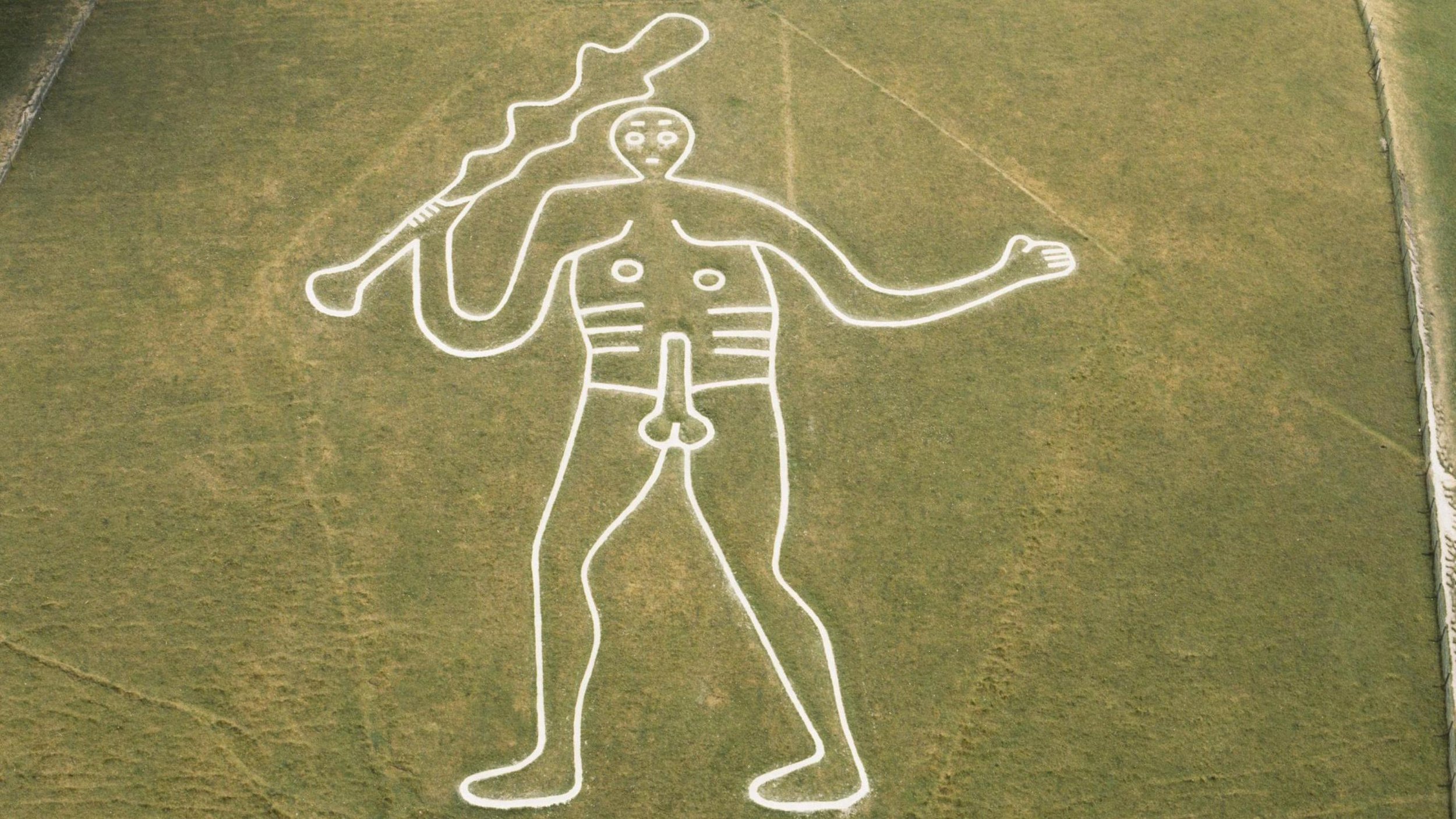
The Cerne Abbas giant has more than just his manhood to recommend him.
This episode sees us take a lighthearted look at the famous chalk giant of Cerne Abbas. Is he Hercules? Or a Saxon diety? Was he drawn by the Romans as a sign of victory or by the hordes of Wessex as a mustering point? Read on as we take you through our favourite theories about the Cerne Abbas Giant.
The Origins of the Giant

There are many things that remain unknown about the Cerne Abbas Giant. Why is he there? What was his original purpose? Who does he depict? And, most tantalisingly, when did he first appear?
Like everything else in folklore, there are many stories and theories about the giant and his purpose. We cover two of these on the show. But we also mentioned a recent bit of research from The University of Oxford which suggests that the giant was carved at some point in the early Medieval period as a mustering point for the armies of the West Saxons. The article is here for anyone who wants to read up on the new dating information from the study. They suggest that the giant was originally carved in the figure of Hercules, which would seem to fit with both the club and the evidence that that figure originally had a cloak draped over one arm. Perhaps this might also explain the giant member too!
Lord Holles vs. The Lord Protector
This blog is too short to even begin to go over the causes, factions and events of the first and second English civil war. If you want to know the what, where, how and who, then I’d really recommend both The Restless Republic by Anna Keay and The English Civil War: A People’s History by Diane Purkiss.
All we need to know is that Denzil Holles, Lord Holles, was part of the breakaway Peace Party which formed during the first English Civil War. While he was keen to limit the powers of the monarchy and the bishops, he had very little time for extremists like Oliver Cromwell and The Levellers.
Perhaps it is Holles’s activity antipathy that gave rise to stories amongst the locals that the giant had been re-cut under orders from Holles as an act of defiance against Cromwell, who was sometimes referred to as ‘The Hercules of England’. No doubt the puritan Cromwell would have been enraged and offended at the shocking sight of the giant’s enormous manhood so visible to all.
The Dissolution of Abbots
Thomas Cromwell, who was the great-uncle of Oliver, made his name in the history books by overseeing the reformation of the monasteries on behalf of Henry VIII. We won’t go into the full overview here as to why Henry chose to break with the church in Rome and make his smash and grab raid on the church’s holding in England. Because it essentially doesn’t matter, for our purposes, why he did it.
What does matter is that during his years-long quest to root out corruption in monastic estates, Cromwell came across many monasteries which were essentially being run as private estates for the sole benefit of the abbot. And one of these places was Cerne Abbey.
The abbot in charge at the time of Cromwell’s investigation was one Thomas Corton, rumoured to be a greedy venal soul who was dissolute in every sense of the word. He was rumoured to be keeping a mistress and he had allowed the abbey lands to fall into disrepair. It was the judgement of Cromwell that the abbey should be disbanded and the estate sold on via the Court of Augmentations. Like most monastic estates, most of the land and buildings belonging to Cerne Abbey were soon snapped up by John Tregonwell, who had been the commissioner sent by Cromwell to assess the rumours of dissolute behaviour.
2.6 Jennet Device and the Pendle Witch Trials
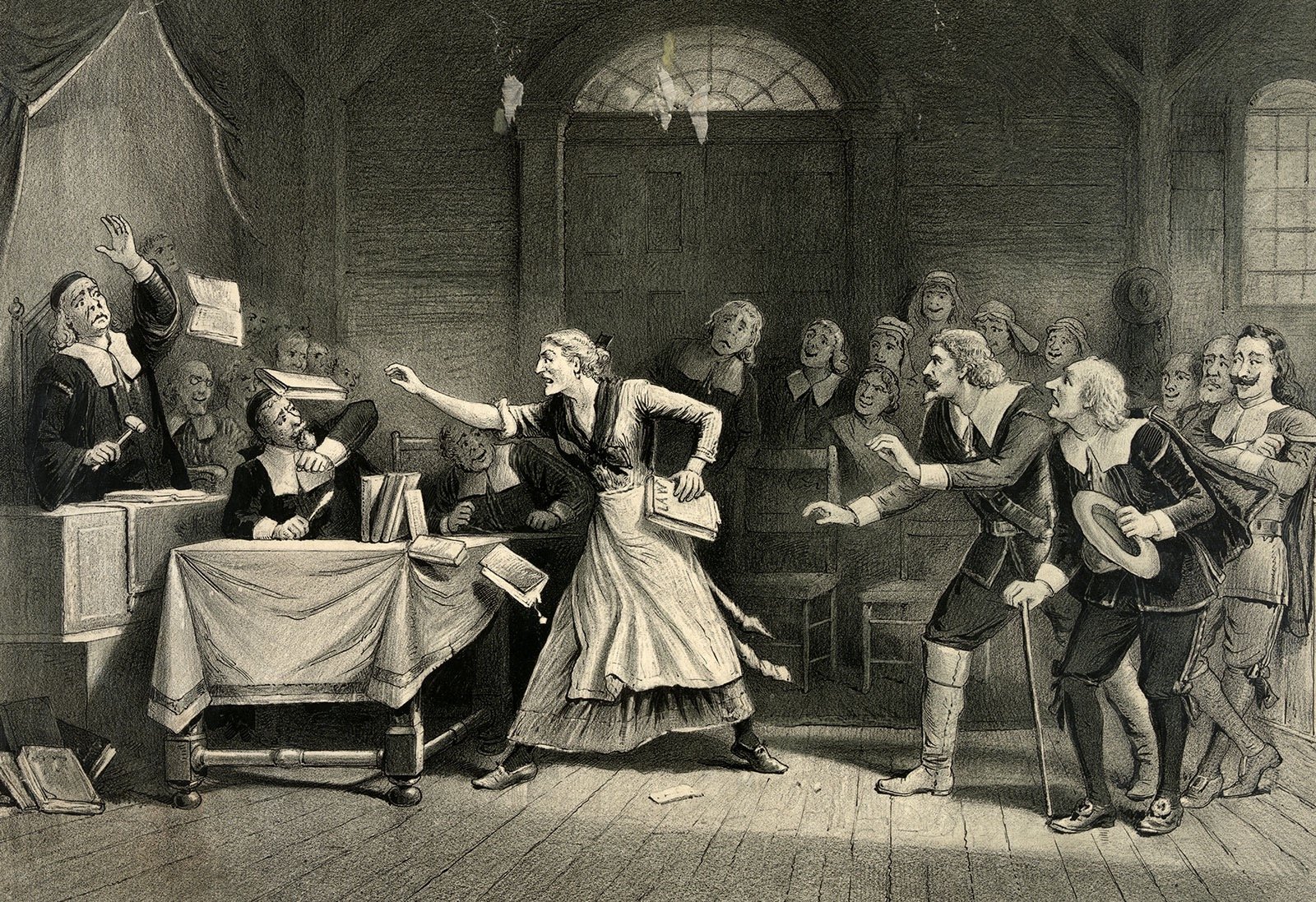
How did a nine-year old girl become the star witness in the most infamous witch trials in English history? Listen to this week’s episode to find out. This is a must listen for those who love witchcraft, the history of English witchcraft and the Pendle Witch Trials.
This week we took a look at the girl who became the star witness in the most infamous witch trials in English history: Jennet Device.
Since we covered almost everything we wanted to say about Jennet in the episode, this week’s blog is going to be a resource list for anyone who wants to do a bit of a deeper dive into the Pendle Witch Trials.
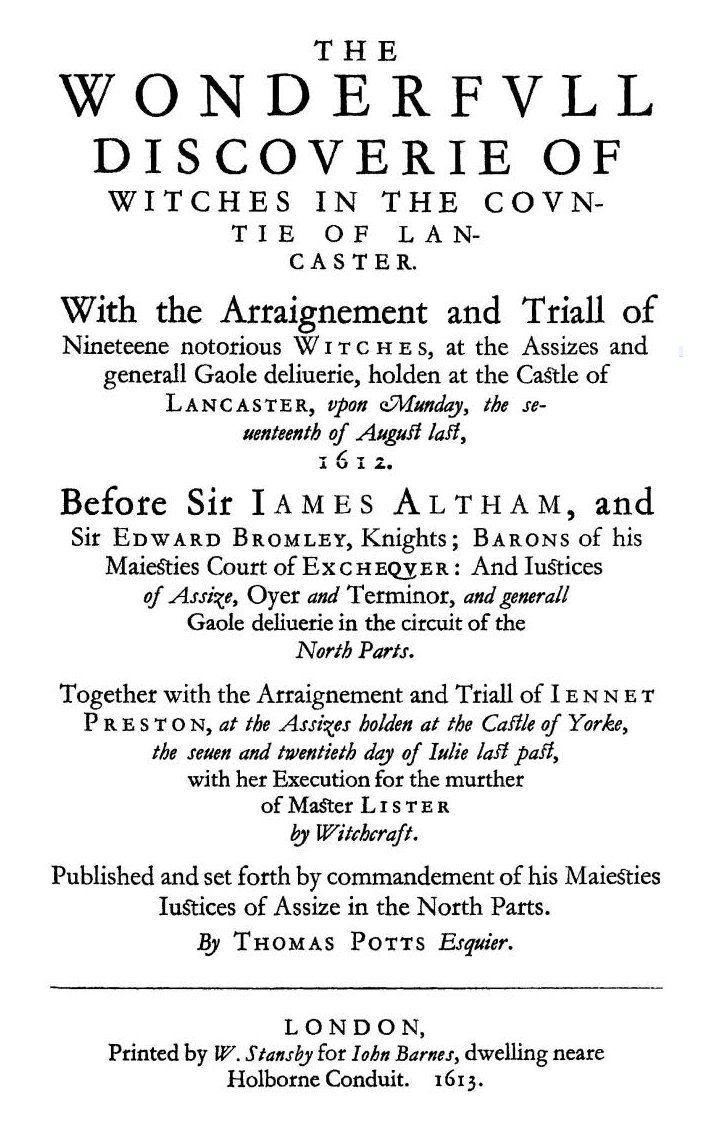
Thomas Potts and A Discovery of Witches
We discussed this text in the episode, and I think it is one of the best sources of information about Jennet and the Pendle Witch Trials. It is written by Thomas Potts, who was clerk to the assizes during the trials and who witnessed and recorded all the testimony. Is it tremendously biased? Definitely. But it is also an incredible insight into the methods and practices used in Jacobean courts to try charges of witchcraft.
What is especially powerful is the reporting of the testimony of the accused and the witnesses, including nine-year-old Jennet. Here is the link to the e-copy on Project Gutenberg.
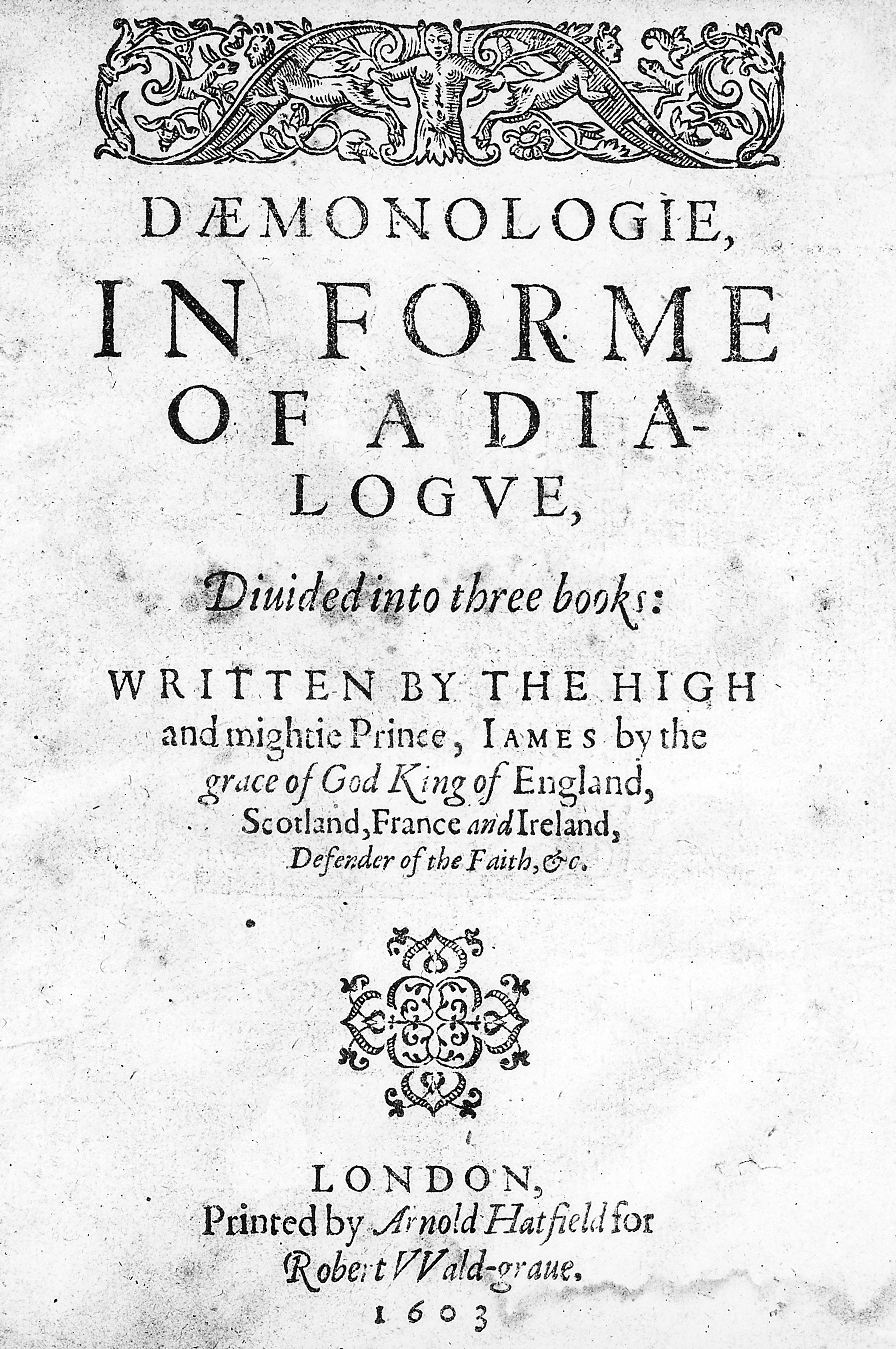
Demonologie by ( of all people) the King of England and Scotland.
I started the episode with a brief run down of the reasons why James the First was so obsessed with witches. But if you really want to understand the inner workings of the mind of an English king so terrified of witchcraft that he personally oversaw the North Berwick Witchtrials, then I suggest you read the musing of the man himself.
Demonologie is an odd text by anyone’s standards. It is presented as a dialogue between two Greek philosophers, one questioning and (apparently) reasoning out the existence, nature, and signs of witches and witchcraft in the world. It is packed with references to scripture but the overall message is very much that of James himself. It is difficult to read but it is quite a startling insight into the mind of someone who can sees demons and witches in almost every aspect of life. Make of it what you will. Here is the link to the Project Gutenberg e-copy.
Pendle Witch Child (BBC Documentary)
Our last recommendation is for the wonderful BBC Documentary ‘Pendle Witch Child’ presented by Simon Armitage (whose poetry I absolutely love). This is a much more comprehensive look into the details of Jennet’s life and the background to the Pendle Witch Trials. I can’t recommend it enough.

2.5 The Hairy Hands of Dartmoor
Beware travelling near Postbridge, where unwary travellers have found their journeys brought to a sudden and dreadful end by a pair of enormous, hairy hands.
Have you ever travelled through Dartmoor and had the strange sensation that your vehicle is no longer under your control? If so, you might have encountered the Hairy Hands…

Photo by Pedro Figueras
Said to haunt a very particular stretch of the B3212 outside of Postbridge, the first gruesome tales begin around 1910. Despite the infrequency of road traffic at this time, a number of victims reported similar experiences: the sensation of their vehicle suddenly losing control, as if their hands on the wheel or handlebars had been grabbed by a pair of extraordinarily strong hands.
Then, in 1921, a medical officer at Dartmoor Prison lost control of his motorcycle, with reports that only his young daughters - who were riding in the side car - had survived the crash. Not more than a few weeks later, a charabanc bus also lost control, which the driver supposedly claimed was due to the sensation of the wheel being ripped from his fingers.
And again in 1921 came another accident in the same spot - this time involving an army captain on a motorcycle - which took the story from local whispers to national news. The captain, newspapers reported, experienced the sensation of enormous hands covering his on the handles to force him off the road.
This was, for many, more than enough evidence of some sort of vengeful spectre. In fact, encounters with the Hairy Hands, as they became known, have continued ever since.

By Phillip Capper (PhillipC) from Wellington, New Zealand - Flickr, CC BY 2.0
Theories
Multiple investigations have drawn a blank on the mystery of the hands, with a few possibilities put forward.
The first, a supernatural explanation, is that the hands belong to an inmate from Dartmoor prison, who died in an accident on that stretch of road.
The second, a scientific explanation, attributes the accidents to the curve and camber of the road. A driver who was unfamiliar with the area might attribute the steering movement caused by the sudden changes in the road surface to a sensation of control being ripped away.
The road has since been altered to account for the poor surface… but it doesn’t account for a number of sightings of the Hairy Hands crawling their way over stationary caravans and cars stopped to admire the view…
So what do you think?
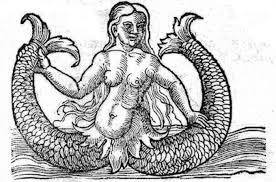
2.4 The Mermaid of Blakemere
This darkly romantic tale of mermaids, witchcraft and betrayal has all the elements of a haunting story. Come with us for two stories of love, revenge and death in the rolling dales of the Peak District.
For this week’s episode, we’ve travelled to the dramatic landscape of the Peak District. Just north of the lovely town of Leek, out on the rolling peaks and dales, there is a lake where a mermaid waits.

The Dark Mere
The lake at Blakemere, also known as Black Mere for both the colour of its waters and its dark history, is associated with many tales of dark deeds and tragic betrayals. The round lake has been associated with murder and dark magic for many centuries. In 1679, it was the site of a murder, when the body of a local peddlar woman was dumped into the pool by an opportunistic killer who was robbing travellers.
The lake is quite small, but local legend has it that it is infinitely deep. In some stories, it is connected to another small lake, Doxy’s Pool, which is not far away. Tales tell that the mermaid uses this secret underground channel to pass back and forth between these two bodies of water.
Then there are the strange lights, phantom hands that appear and try to drag you into the mere. Blakemere is a haunted place it seems.
Other stories focus on the evils associated with the pool, telling of animals that refuse to drink from the dark waters or flocks of birds that fly around the pool. When naturalist Robert Plot visited the site for his 1686 book The Natural History of Staffordshire, he noted that his horse drank well from the water and the he saw many animals come to the pool. So perhaps these details were just eldrich additions to an already eerie legend.
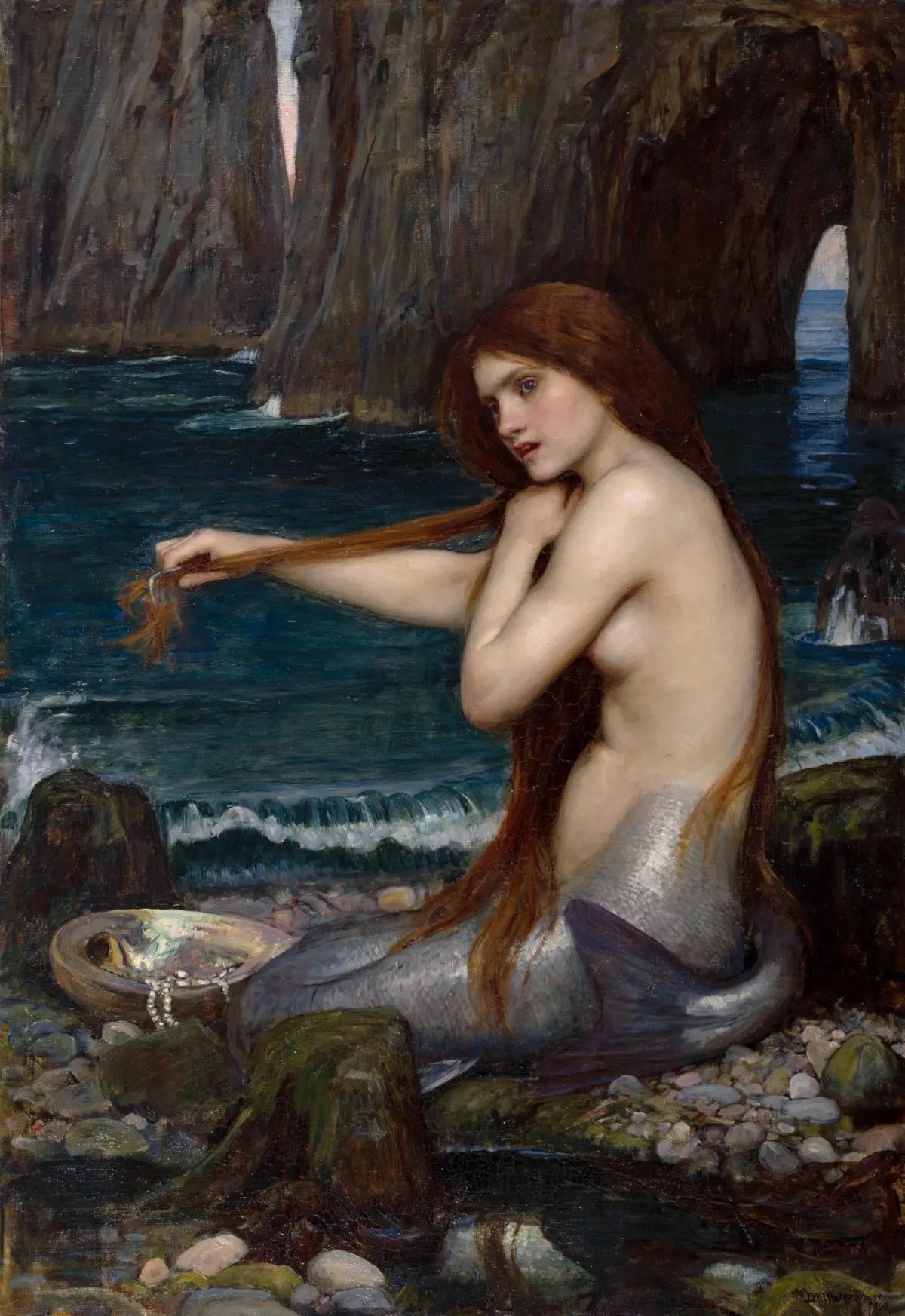
The Mere Maid
There are many local tales explaining how the mermaid came to live in a small lake so far from the sea, some romantic and some tragic. Like many freshwater mermaid stories, the mermaid is associated with death and danger.
The most romantic and haunting is the story that the mermaid of the pool is a seamaid, brought back by a love-sick sailor from some far-flung ocean to be his love. There are different versions of just what happens next. Does the sailor tire of her, leaving her to become angry and resentful? Or, as a mortal, does he die, leaving her pining for a new love? We had a long think about using these stories for this episode but there was something about them that was too similar to the stories we’d already written for the episode on Sabrina of the Severn.
Then there are the more gruesome, tragic tales. The one that inspired Sam’s story tells of a local man called Joshua Linnet, who fell in love with a local girl. When the girl spurned his advances, he accused her of witchcraft and had her drowned in the mere. It is said that with her last breath, the girl cursed Linnet; three days later he was found dead, with claw marks on his face.
By some twist of magic, she returned as the vengeful mermaid, intent on wreaking her revenge by drowning every young man who comes near the pool.

The Mermaid Inn
In my mind, nothing is more romatic than an inn out on the wild moors. For me, it conjures up childhood memories of reading The Highwayman by Alfred Noyes or the haunting romance of Wuthering Heights by Emily Bronte. So when I saw the picture of The Mermaid Inn during my research, I knew I’d be setting at least part of my story there. From there it was a short leap to imagine the landlord’s young daughter listening to her grandmother’s telling of (her version) of the legend of the Mermaid of Blakemere. One of the things I love about folklore is the adaptive nature of the stories, with every storyteller adding or subtracting elements to suit their reader. This particular tale seems to lend itself to a warning to young girls- be careful who you fall for, not every young man is trustworthy.

2.3 Who Put Bella in the Wych Elm?
An unsolved murder and mysterious graffiti ask the same question: Who Put Bella In The Wych Elm?
Explore a real mystery this week in our mini-sode ‘Who Put Bella in the Wych Elm’
The Crime
On the 18th April 1943, four boys poaching wild birds eggs in Hagley Wood make a gruesome discovery; a human skull inside the hollow of a sprawling Wych Elm. Although they agree to keep the secret, a fit of guilt overtakes one of the boys and he confesses to his parents, who promptly take him to the police.
Following his instructions on the location of the elm, which is well concealed in a coppice, the investigating constables find not just a skull but a whole skeleton - minus one hand, located in a field nearby.
A coroner determines the victim is a woman, no more than five feet tall, who was likely smothered to death and her body squeezed into the hollow before it grew too stiff. She had likely died in the autumn of 1941, some two years previously. But despite the skull and dental records, there were missing persons reports or matched records.
With little information and amongst the confusion of the war efforts, the case is marked unsolved and set aside. Until a message appears…
The Graffiti

“WHO PUT LUBELLA DOWN THE WYCH ELM?”
Scrawled on a wall on Hyden Hill Road in 1944, to high to be written by a child, the message relaunches efforts to find this mysterious ‘Lubella’. And soon more graffiti appears, all over Hagley Wood, shortening to ‘Who put Bella in the wych elm?’
The Theories:

A number of theories sprang up, the first, and most likely, matches to a police report of a missing sex worker made in 1944 known as Bella who had vanished at least three years previously.
The second, now proven false, maintained that the woman was a Nazi spy parachuted into England.
However, the severed hand provides our spookiest theory; witchcraft. Perhaps Bella was the victim of an attempt to make a hand of glory in a ritualistic murder that linked to a crime in nearby Lower Quinton in 1945.
Unfortunately no investigations so far have proved conclusive. With both the victim and the crime still a mystery, all that remains is the question: Who put Bella in the wych elm?
